The government of the Dominican Republic has announced rules for restarting tourism under COVID-19.
Update from July 1, 2020.
The Ministry of Tourism of the Dominican Republic (MITUR) has announced safety protocols that all tour operators and companies must follow to ensure the safety of tourists and residents alike.
Documents available for download on the Ministry’s official website (www.GoDominicanRepublic.com) lay out in detail the precautions and additional safety measures being put in place starting July 1.
“The measures set out in these protocols are the result of extensive work and cooperation between government and private organizations,” said Minister of Tourism Francisco Javier García. “All safety measures align with recommendations from the World Health Organization (WHO). They’re designed to keep both those providing tourism services and the tourists themselves safe. The core principle guiding us is building the structure and conditions needed to deliver unforgettable travel experiences in line with strict new standards for the industry,” Minister García said.
To keep air travel safe, additional rules will be introduced at the country’s airports. Upon arrival, every passenger is screened for symptoms and signs of illness. If a passenger is found to have a temperature above 38°C, or shows other symptoms (such as coughing), airport staff are required to refer that passenger for further medical evaluation and a rapid COVID-19 test, and to arrange isolation and treatment for anyone with a confirmed diagnosis.
In addition, passenger boarding and disembarkation at airport terminals will follow social distancing measures. Wearing masks and gloves is mandatory at the airport, for staff and passengers alike.
Beyond filling out immigration and customs forms, Dominican authorities now require passengers to submit a health affidavit. Through this declaration, passengers confirm they haven’t experienced any COVID-19 symptoms in the past 72 hours, and agree to report on their health status for the following 30 days.
The updated safety measures include the following.
At hotels:
- Mandatory temperature checks for every guest at check-in.
- A signed health declaration from every guest.
- Masks and hand sanitizer provided to guests.
- Reorganizing hotel spaces and all common areas (front desk, restaurants, pools) to maintain social distancing.
- Luggage disinfection.
- Discontinuing self-service at hotel restaurants.
- New protocols for isolating and caring for guests who show symptoms.
At bars:
- Regular cleaning and disinfection of tables (after every customer).
- All staff required to take a COVID-19 test every two weeks.
- Seating capacity reduced to 35% to ensure safe distancing between customers.
- Customers required to wear a mask to enter the venue, but allowed to remove it once seated at their table.
- Hand-sanitizer dispensers placed throughout every bar.
At restaurants:
- Tables spaced at least two meters apart.
- Maximum seating of 10 guests per table.
- New menu formats to reduce physical contact: digital or disposable printed menus.
- Food-safe disinfectants used on any produce eaten raw.
- Regular disinfection of all surfaces frequently touched by staff or customers.
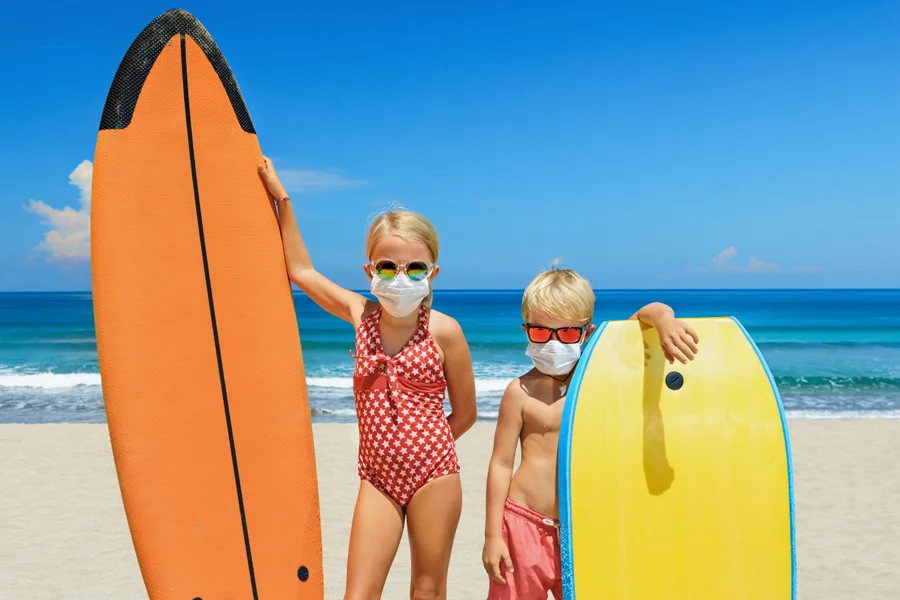
For water transport and water sports:
- Temperature checks for every passenger before boarding any excursion vehicle or vessel.
- Thorough disinfection of all equipment, before and after use by customers.
- Disinfection of all vehicles and vessels, before and after each use by customers.
- Maintaining the established safe distance.
For other tourism activities (horseback riding, sightseeing, theme parks, and paintball):
- Vehicle capacity reduced to 50% to ensure safe distancing between customers.
- Masks required inside all vehicles.
- Planned routes designed to avoid crossing paths with other tourist groups.
- Disinfection of all surfaces and equipment customers come into contact with (reins, harnesses, helmets, vests).
Enforcement of all these rules falls to the Ministry of Tourism and the Ministry of Health. To oversee compliance with safety rules at hotels, a Quality Council was established, led by the National Hotel and Tourism Association (ASONAHORES), which will ensure all relevant rules are followed to keep tourists comfortable and safe.