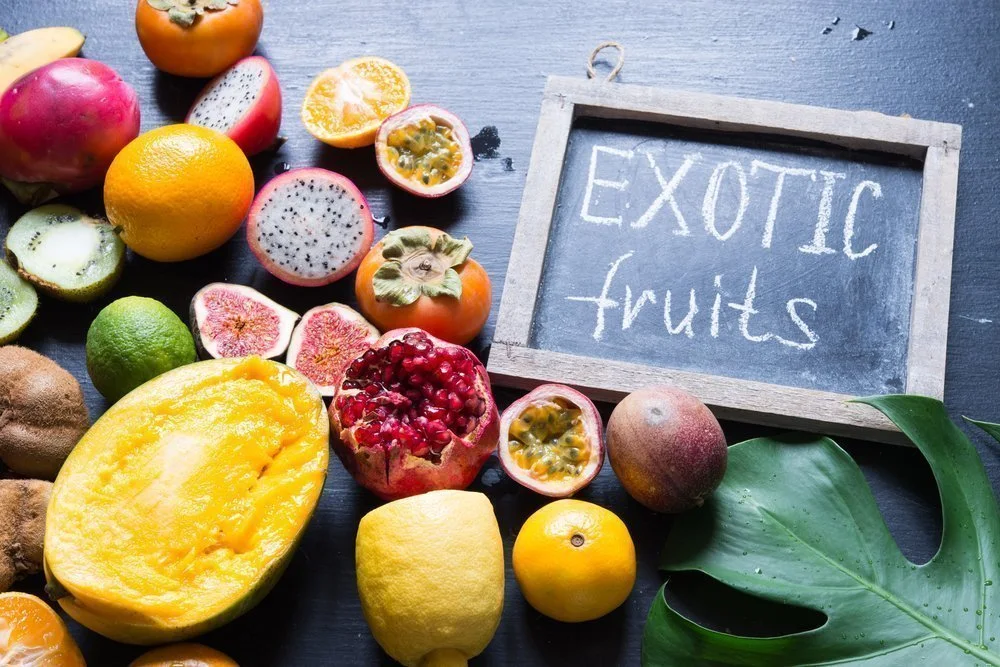
In a previous article we talked about the most delicious, but fairly ordinary, Dominican fruits: pineapple, coconut, mango, papaya, pitahaya, passion fruit, and guava. But why stop at what’s familiar and standard in the Caribbean? Here’s the full list of unusual, interesting, and maybe even strange fruits that grow in the Dominican Republic.
In the Dominican Republic, some fruits function as vegetables. That’s not as odd as it sounds: some fruits with fairly neutral flavors are used by Dominicans for side dishes and juices. Take, for example, the everyday side dish you’ll find at any hotel — fried plantains. A plantain is a type of banana that stays green even when ripe, developing flavor as it’s fried. It’s a bit like fried potatoes — a versatile dish — and, like potatoes, it can technically be eaten raw, but that would be pretty strange.
The gastronomic equivalent of plantain is yuca, or cassava. This small plant produces starchy roots that also resemble potatoes. Both banana and yuca are made into chips in the Dominican Republic — we recommend trying them and comparing them to the usual kind.
Another “fruit-vegetable” is unripe guava. It has a fairly neutral flavor and is traditionally served as a side with meat dishes.
Tamarillo is a fruit that looks a lot like a tomato. The plant is called the “tomato tree,” and its official name is Cyphomandra betacea (tree tomato). It’s eaten raw after peeling off the bitter skin, or preserved — it doesn’t keep for long otherwise.
Similarly named tamarind is a legume, but a versatile one. Not quite ripe? Into a sauce! Ripe? Into dessert!
Ackee (also called seso) is Jamaica’s national fruit, but everything’s close by here, so ackee grows in the Dominican Republic too. It cannot be eaten unripe or raw — the flesh of unripe fruit is used to make a poison for fishing. Only the pale-colored flesh of ripe ackee is edible. Fried, it tastes a bit like scrambled eggs, and it’s even eaten with bacon.
Breadfruit has been a staple food for island dwellers for centuries — another honorary “potato” on our list. It’s fried, boiled, baked, dried, and eaten raw. Like many other fruits, unripe breadfruit is used as a vegetable, while ripe fruit is eaten as a fruit. Fried green breadfruit mashed with garlic and pork cracklings is one of the tastiest dishes around, called mofongo.
Chayote, also known as the “Mexican cucumber,” is a squash relative prized by the Aztecs and Maya, baked, boiled, fried, or tossed straight into a salad; the seeds are roasted for a nutty flavor, and the young leaves and shoot tips are stewed — pretty much everything about it is edible.
Noni is a completely unappetizing, bitter, but very popular and healthy fruit, also known as morinda. It’s made into juices known for their medicinal properties — noni is a natural antioxidant.
Sapodilla, also called chico or “sweet potato” or “fig kiwi,” is both a fruit and a medicine. Wine can even be made from it, and the sapodilla tree’s sap is used to produce latex (chicle). As always, islanders put every part to use. Unripe fruit is used to stop diarrhea, and an extract from the seeds is used as a sedative. So we don’t recommend eating unripe fruit, but if you do — eat it seeds and all; either way, you probably won’t be too worried about what happens to your body afterward :)
Acerola, or Barbados cherry, is one of the few berries available in the Dominican Republic. It looks like a cross between lingonberry and cranberry, with a tart flavor. It spoils quickly but works well in compotes. Dominicans drink a decoction of it for the flu — not unlike a fruit tonic.
Sapote, white sapote, Mexican apple, Dominican pear, “pera criolla,” mamey sapote — another fruit highly prized by the Aztecs. It can be eaten raw, best with something sweet. Its custard-like flesh has a fairly neutral flavor, which is why sapote is used in creams, jams, and pies. Sapote seeds are considered poisonous — according to legend, the Aztecs made “sleeping potions” from them, though the exact “sleep” duration and dosage are unknown, so it’s best not to risk it.
Passion fruit and granadilla both belong to the genus Passiflora — in fact, “passion fruit” literally comes from that same word. Who wouldn’t want to try a passionflower? It’s one of the few “classic” tropical fruits on our Dominican list — well-known, harmless, delicious. Cut it in half and scoop out the pulp and seeds with a spoon!
Soursop, or “cream apple,” is a fantastic fruit that adds a gentle creaminess to everything. It’s used in desserts, smoothies, and creams, added to tea, or frozen and eaten as is — its juice can even be fermented into something resembling cider.
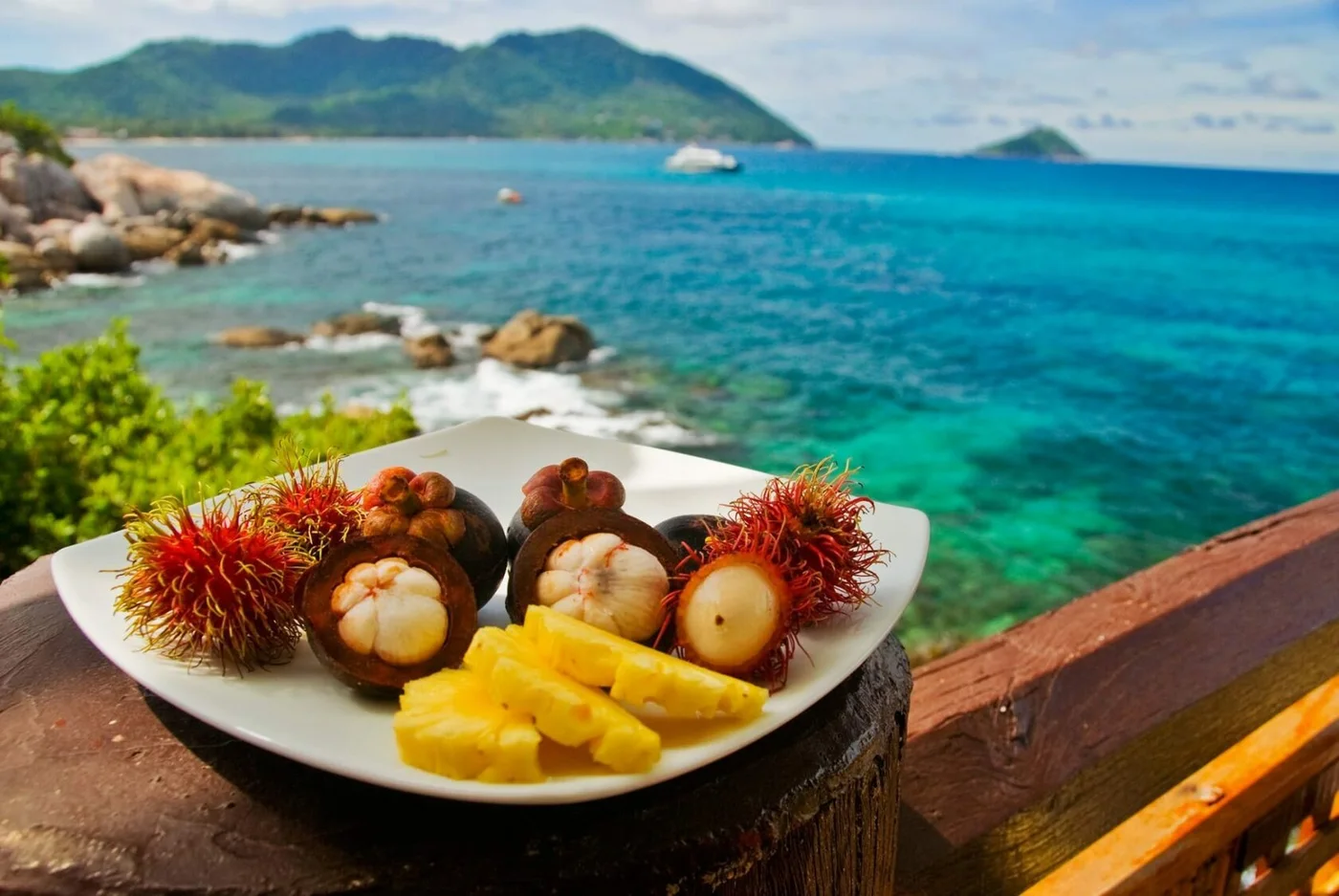
Limoncillo, mamoncillo, mamón, “Spanish lime” — a tasty, juicy fruit with a slight tartness. It’s eaten fresh, and also added to seafood salads — a perfect combination! Because they taste so good, it’s easy to lose count of these small fruits and eat them like sunflower seeds.
Jagua, the genipa fruit, is only edible in its natural form once fully ripe. It tastes a bit like quince. It’s made into juices, jams, and sauces, but its main value lies in its ability to turn a fierce black very quickly, providing indigenous peoples with excellent ink for body art.
Chomp, or water apple, has juicy, tender, crunchy flesh with a scent reminiscent of rose. Another winemaking ingredient in the Dominican Republic, and it also works wonderfully in desserts.
The “hairy fruit,” rambutan, is originally from Asia but is also grown in the Dominican Republic. You may have seen it at your local supermarket too, but trust us — it’s not the same! A fruit ripened on a Dominican tree has a sweet, delicate, slightly grape-like flavor.
Níspero is loquat. It tastes like a cross between apricot and apple with a plum-like note. It can be eaten raw, boiled into compotes, made into jams, or cooked into sauces — whatever you like. This fruit is well known and widespread around the world and especially loved by the Spanish, though it originally comes from China.
Yellow mombin, “Jamaica plum,” hobo — another fruit prized by the Aztecs, though not exactly in the way you’d expect: according to the writings of the researcher Bernardino de Sahagún, “Atoyaxocotl are large, sweet, tasty plums, good to eat both raw and cooked… Pulque is made from them for drinking, and it intoxicates more strongly than honey.” It can still be eaten raw or used in desserts today. The fruit is sweet with a slight tartness. But don’t overdo it — this fruit is best eaten in small amounts, otherwise you may end up with a set of symptoms resembling food poisoning.
Mamey, “American apricot,” “Antillean apricot” — as the name suggests, its flesh tastes a lot like apricot. It can be eaten raw or used in desserts, and wine is also made from mamey.
Star fruit (carambola) is a well-known, widespread fruit shaped like a star. It’s sweet and juicy, tasting a bit like an apple-flavored gooseberry — the very essence of the phrase “tropical fruit.”
Star apple, or caimito, is a small fruit whose color varies by variety, though the most popular caimito is a deep, dark shade. Its flesh is pale, sweet, and fairly rich in flavor, while the skin is completely inedible. Best eaten fresh or cooked into a compote.
Ambarella, “yellow plum,” “Otaheite apple,” sweet mombin — another member of the mombin family. Its flesh is sweet, resembling a mix of pineapple and mango. Like yellow mombin, ambarella can be eaten any way you like: ripe, as a fruit or dessert ingredient, or unripe, as a side dish.
Cajuil, marañón — this is the cashew nut we all know. As if its odd appearance weren’t enough, the Spanish went and named it “cajuil” too. But otherwise, it’s still the same delicious nut. In the Dominican Republic you can buy it fresh, still attached to its fruit body, which is also edible — a juicy, slightly tart flesh.
Sea grape is another berry that genuinely looks and tastes like grapes, growing in clusters on Coccoloba trees. It’s used just like grapes: the fresh fruit, wine, and desserts made from it are all delicious.