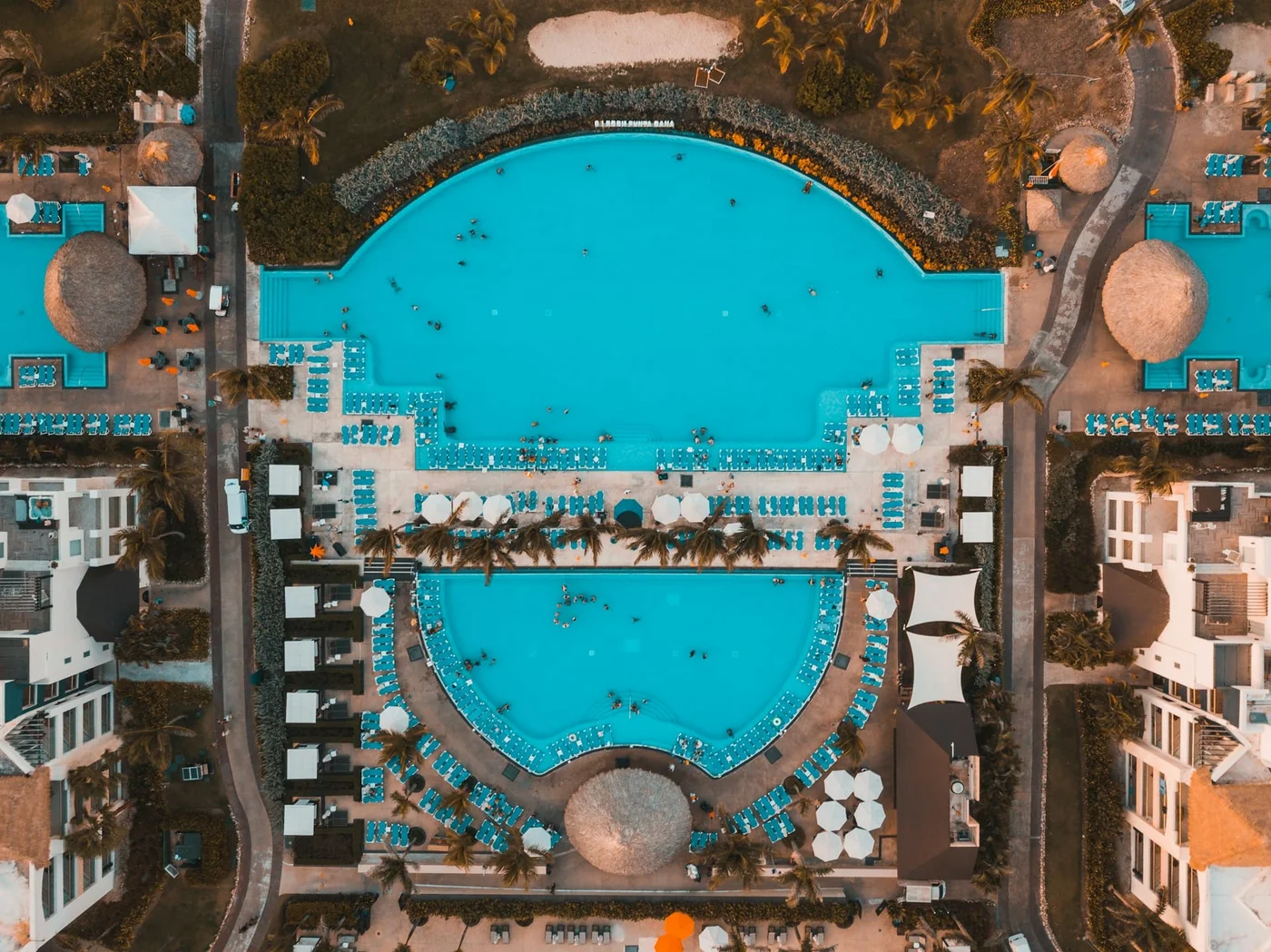
The Dominican Republic is one of the most visited and beloved countries in the Caribbean.
Millions of tourists visit the country every year, but far from all of them are willing to leave their luxury hotels and give up the perks of an all-inclusive package to find out how the country really lives and just how much variety it has to offer.
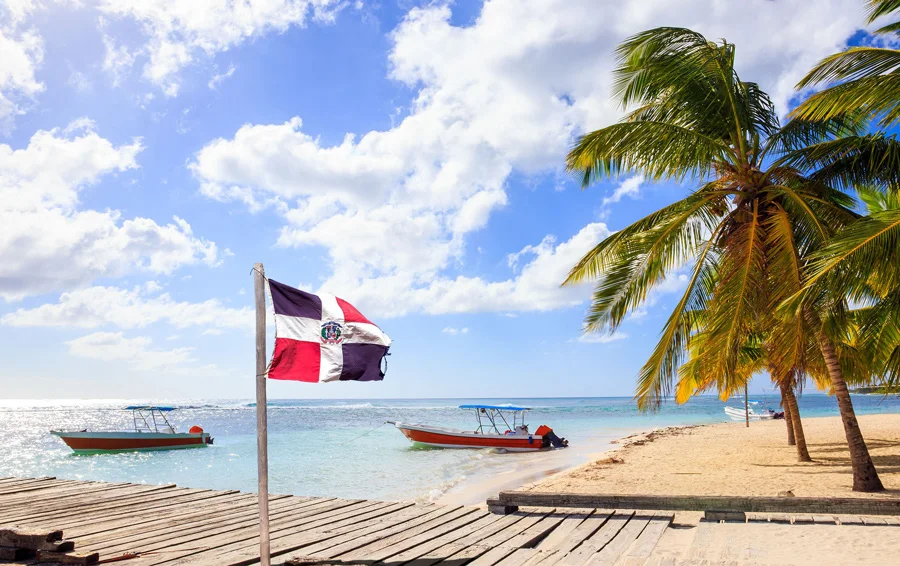
Few people know that beyond the leaning coconut palms and snow-white sand, the Dominican Republic also has mountain peaks, majestic gorges, and both large and small waterfalls. Few would believe that in this country you can find snow lying in the mountains, wander through a forest looking for berries, or pick strawberries by the bucketful in open fields.
The Dominican Republic is a paradise where some of the happiest people on the planet live. And anyone who comes here risks leaving a piece of their heart behind.
In this article, we’ll share our own experience: facts and details that will help you understand and truly feel this amazing country even more.
60 facts
-
The country’s calling card is its snow-white beaches lined with leaning coconut palms stretching into the sea. The island is bordered by the Atlantic to the north and the Caribbean Sea to the south, with more than 1,000 kilometers of coastline. Even though the Dominican Republic is associated mainly with white sand, its beaches are actually quite varied, and so are the shades of sand.
-
The flag of the Dominican Republic features a white cross that splits a blue-and-red field, reminiscent of Haiti’s flag. At the center of the flag sits the country’s coat of arms. Blue stands for freedom, white for faith and salvation, and red for blood and independence.
-
Dominicans know how to live in the moment. They savor and take in every second of their lives. This remarkable quality lets them stay relaxed and not sweat the small stuff. At the same time, it shapes a very different relationship with “punctuality.” While vacationing in this country, it’s best to forget about the clock. A “Dominican five minutes” can easily stretch into half an hour. If you ask for something and hear “mañana” in response — Spanish for “tomorrow” — get ready to wait at least a few days. And “the day after tomorrow” basically means never.
-
The Dominican Republic became a leader in cigar production after Cuba was hit with an embargo. The country is home to the world’s largest cigar factory, Tabacalera García. Small cigar shops can be found in every region, and even in every village. Cigar-making is entirely manual labor — a torcedor (cigar roller) can produce more than 300 cigars a day.
-
Mamajuana is an elixir of vitality, sometimes called “Dominican Viagra.” This national alcoholic infusion is a blend of various herbs, roots, and spices, mixed in a certain proportion and topped off with rum, red wine, and honey. Every village has its own unique recipe. Mamajuana is said to have antiseptic and anti-inflammatory properties and is also famous as a powerful aphrodisiac that boosts male performance. The bonus: once the infusion runs low, you can simply top up the same roots with more alcohol again and again, for up to 3 years.
-
The country’s local currency is the Dominican peso. Right now, $1 USD equals about 56.76 pesos. Dominicans are happy to accept dollars too, but it’s worth staying alert and checking the exchange rate. You can exchange dollars for pesos at any bank in the country with your passport, as well as at exchange booths or your hotel’s front desk. The best rate is usually found at a currency exchange booth.
-
A Dominican’s basic diet always includes rice, either white (arroz blanco) or fried (arroz frito). Chicken — el pollo — fried or boiled. And, of course, beans (habichuelas dominicanas).
-
Dominican women love beauty salons. Almost every one of them dreams of smooth, straight hair. Women spend plenty of money and time chemically straightening their naturally curly hair. Locals’ hair is naturally coarse, so if you buy any hair mask here, you’ll be pleasantly surprised by how nourishing it is! As for manicures and pedicures, the skin on Dominican women’s palms and feet tends to be much rougher, so your first visit to a local salon might come as a bit of a surprise.
-
Dominican women have a rather unusual sense of style and fashion. Most love bright, bold clothing in acid tones, and chunky jewelry — hoop earrings, big rings. When it comes to manicures, long acrylic nails in bold colors are common. Dominican women have no qualms about going outside in curlers, tucked under a black hairnet stocking. They might walk around like that on the way to the store, or even just stroll down the street.
-
Old, decommissioned American school buses — the same ones that once carried US schoolkids — still run all over the country. Many of these buses are used for excursions, and locals happily renovate and repaint the interiors, turning them into comfortable, convenient vehicles.
-
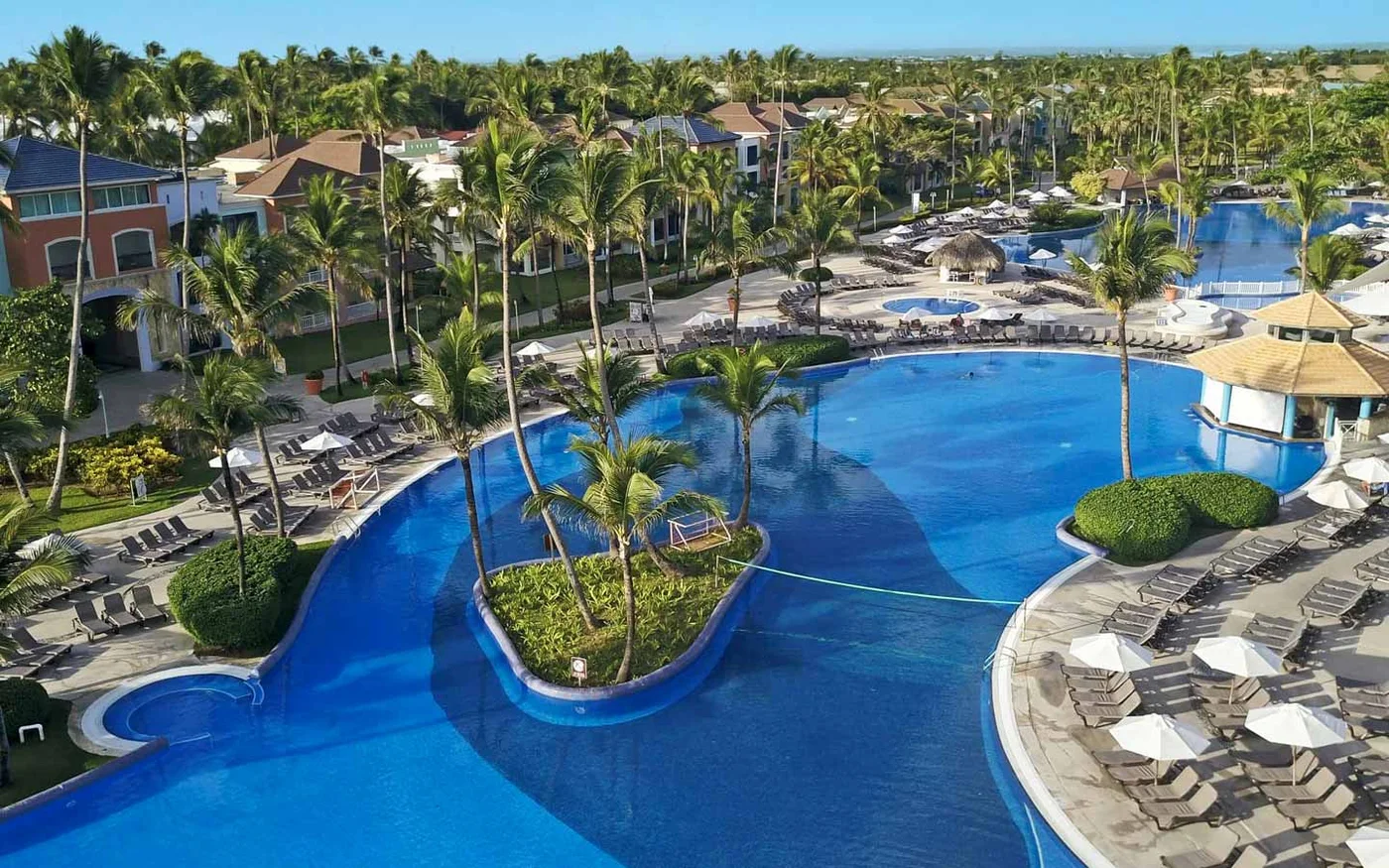
If you’re staying at a large resort, don’t be surprised to run into a peacock, a pink flamingo, or a white heron wandering freely around the grounds. Some hotels have so many peacocks that they’ll shriek right outside your room early in the morning — even louder than a rooster.
-
There aren’t many stray cats left in the Dominican Republic. Any idea why? Haitians — poor residents of the neighboring country — catch and eat them. As a result, the cats that remain tend to be more skittish and wild. And if they do respond to a call, it’s to “Mish-mish-mish,” not the usual “here, kitty, kitty” — that one won’t get a reaction at all.
-
Dominican folk art is known as “Haitian Naïve” art. Common subjects include rural scenery, landscapes, and human figures, often depicted schematically or in motion. Bright colors are used, reflecting the character of the locals and their outlook on life. Given how simple the subjects are, the paintings might all look alike at first glance — but look closer, and you’ll realize no two are the same. Prices for these paintings range from $8 to $100, depending on size.
-
There’s no “rainy season” here in the usual sense of the term. Rain tends to fall more often at night or early in the morning, and only briefly. Of course, rainfall increases between September and November, but it has nothing in common with Thailand’s tropical downpours.
-
Dominicans love to gamble. Many believe they’ll win the lottery one day. In every little village you’ll find small storefronts labeled “BANCA,” Spanish for “lottery.”
-
Dominicans aren’t savers. Their principle is “here and now.” When a Dominican comes into a large sum of money, they’re more likely to throw a party, rent an expensive car for the weekend, or buy a “day pass” at a hotel than put that money in a savings account.
-
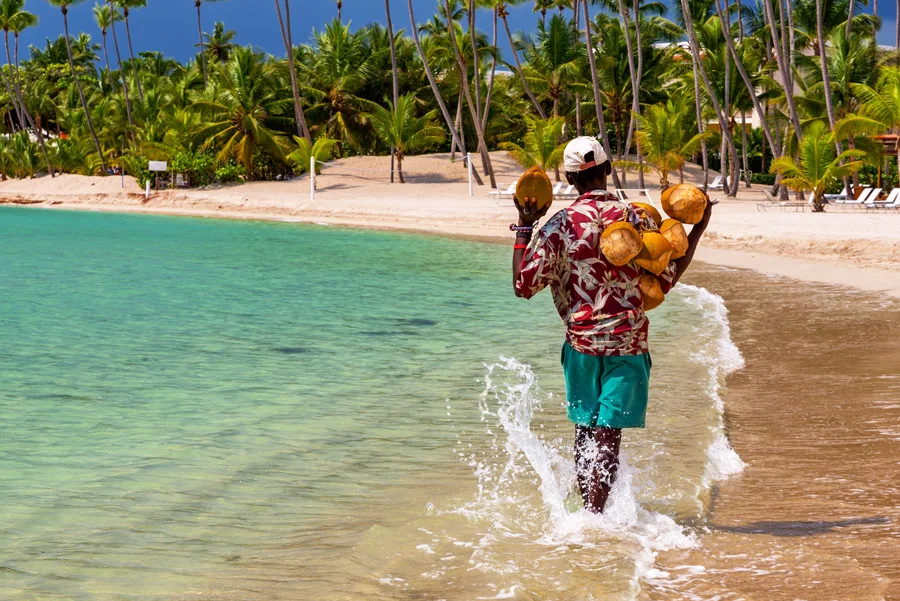
This contemplative, unhurried pace of life shows up in everyday habits. Setting up chairs along the roadside to sit and watch traffic go by is a common Dominican pastime. But if you see a pile of coconuts next to such a table, with a price sign — that’s an actual job.
-
The Dominican Republic and Dominica are two different Caribbean nations that often get mixed up. The meaning and origin of their names are different. Dominica is named after the Italian word for “Sunday,” the day of the week Christopher Columbus discovered the island. The Dominican Republic, on the other hand, takes its name from its capital, Santo Domingo, itself named after the founder of the Dominican Order, Saint Dominic.
-
Most people in rural areas don’t have glass windows. Instead of glass, they use small wooden slats, resembling horizontal blinds. This ventilation system works well: open the door and lift the slats, and you get a cross-breeze; lower them, and you get shade. You can even quickly dry a room’s floor by angling the slats a certain way on a windy day.
-
A career in the military is one of the most prestigious and respected professions in the Dominican Republic. Since military service here is voluntary and in high demand, for many families it’s a way to build a career and provide for their household.
-
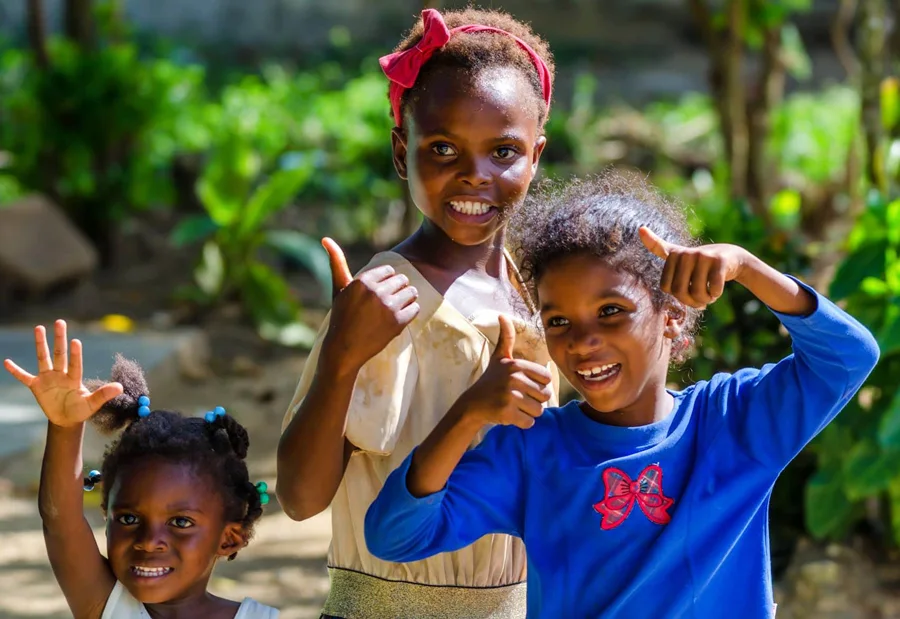
Dominicans love having their photo taken, and it really doesn’t matter to them whether you actually send them the photo afterward or not. By the way, the country is perfect for photo shoots and photo tours — whether it’s an individual portfolio session or a full-family photo day. Private, secluded beaches with comfortable conditions for shoots are especially popular.
-
Under no circumstances should you drink tap water in the Dominican Republic! Bottled water is by far the best option. That’s because tap water is often the same water as the ocean, just desalinated. Its quality depends on the filtration systems in place — even the cost of renting a property here can vary depending on the water quality at that particular residence.
-
You can get sunburned in just 15 minutes even on an overcast day. It’s often windy by the ocean, which can make it feel like it’s not that hot — but even without direct sun, enough UV gets through to cause a burn, especially if you have fair skin. A thick layer of aloe vera gel works wonders for burns, and sunscreen with SPF 50 or higher should be reapplied after every swim while you’re out in the sun.
-
The world’s largest amber deposits are found in Puerto Plata, on the country’s north coast — an area also known as the “Amber Coast.” Even though amber isn’t exactly a novelty for many travelers, tourists still love bringing it home as a souvenir. Dominican amber stands out for its unusual organic inclusions (insects, plants) and wide range of shades. The rarest and most valuable is blue amber. The stone itself is yellow, but under certain lighting it reveals a deep blue shimmer.
-
Larimar was first discovered anywhere in the world right here in the Dominican Republic, in 1974. This semi-precious, cloudy blue stone is considered a variety of pectolite. The jeweler Miguel Méndez, who discovered the mineral, named it after his daughter Larissa, combining the start of her name with the Spanish word “mar,” meaning “sea.” And indeed, the stone’s color seems to echo that of the Caribbean Sea. This “Dominican turquoise” is used to make jewelry that women adore. Worth noting: the only other place on the planet where larimar is found is the Fitta area near Soave, Italy.
-
There isn’t a single Dominican who doesn’t love coffee. Coffee has been grown here for more than 300 years, and it’s prized worldwide for its aroma and strength. Dominican coffee is good old-fashioned Arabica. Seedlings are grown in nurseries, then transplanted onto mountain slopes at elevations above 1,500 meters. Coffee trees often grow in the shade of larger plants, such as cacao — and that neighborliness gives the coffee a hint of chocolate in its flavor. Popular brands include Monte Real, Santo Domingo, and Induban.
-
The Dominican Republic is one of the world’s leading producers of organic cacao. The finest cacao beans are grown in the Cibao valley, San Francisco de Macorís, and Santiago. Roasted, ground cacao beans may have sugar, vanilla, cinnamon, and even pepper added to them. The resulting paste is mixed and rolled into balls — and that’s actually the most common form cacao is sold in throughout the Dominican Republic. To use one, grate it finely and dissolve it in hot milk. By the way, be sure to try whole cacao beans too — they’re a source of dopamine and antioxidants. Just a few cacao beans are enough to help keep you physically and mentally sharp.
-
The Dominican Republic sits on an island discovered by Christopher Columbus in 1492. Upon setting foot on this land, Columbus named it “Hispaniola” — “little Spain.” The island itself is commonly referred to as “the island of Haiti,” since the Republic of Haiti occupies about a third of its western portion.
-
To mark the 500th anniversary of the discovery of the Americas, the Columbus Lighthouse was built in Santo Domingo. This memorial is shaped like a cross, 310 meters long, with powerful spotlights at its peak. Construction took 7 years and cost $70 million. Inside the lighthouse is a marble tomb with an ornate wrought-metal chest at its center, said by some to hold the remains of the great explorer himself. The lighthouse is especially beautiful at night, when 157 spotlights on its roof project a glowing cross into the sky — a rare sight, reserved for major holidays.
-
Near the Columbus Lighthouse you’ll spot the Popemobile, a gift from Pope John Paul II. The pontiff visited the country several times, and during his trip to mark the opening of the Columbus memorial, he decided to leave his own vehicle behind for Dominicans.
-
Daily life in the Dominican Republic revolves around the colmado — small neighborhood shops found even in the most sparsely populated areas. It’s the Dominican version of a corner store. At a colmado you can find just about everything, from bread and milk to glue and nails. Owners try to keep a wide selection of in-demand goods on hand, and you can buy things individually — it’s not unusual to see someone paying for a single tomato, one onion, and one small green pepper.
-
Despite how widespread cigar production is, Dominicans as a nation smoke relatively little. Rum, on the other hand, they love — but they drink it in moderation and rarely get visibly drunk. It’s rare to see a Dominican stumbling around. Rum is usually drunk in cocktails — the most common being “Cuba Libre” (rum and cola) and “Santa Libre” (rum and Sprite), where there’s usually more ice in the glass than actual drink. So if you have a delicate throat, look the bartender in the eye and add “sin hielo” — Spanish for “no ice.”
-
There’s no pension system, unemployment benefits, or other social payments in the Dominican Republic. This largely explains why Dominicans tend to have large families — after all, who else will take care of aging parents but their own children? The only payout a Dominican can count on when let go from a job is the “liquidación” — a portion of the contributions made during their time of official employment.
-
Dominicans adore children, which is why families here tend to be large. Girls come of age at 15, and boys at 16 — once they reach that age, they can officially marry and start a family. Large families are sometimes also attributed to the country’s official ban on abortion.
-
Dominicans don’t drink tea. Tea is generally seen as a drink for when you’re sick. If you ask for tea at a restaurant, you’ll most likely get chamomile, linden, or an herbal blend. Their drink of choice is coffee — strong, with plenty of sugar, poured into small 25 ml plastic cups. It’s hard to imagine a Dominican morning without that little jolt of energy.
-
The country is home to a unique salt lake, Enriquillo, formed by an earthquake in neighboring Haiti. Crocodiles live there, and to this day you can spot them in the wild if you take a trip through the surrounding mangroves.
-
In the middle of Lake Enriquillo sits a small island, Cabritos, where female crocodiles lay their eggs. So heading out there with a knowledgeable guide gives you a unique chance to see not just adult crocodiles but their young too. Cabritos is also home to a rare species of red-eyed iguana.
-
The neighboring nation of Haiti lives below the poverty line. Many residents still live among the ruins left by the 2010 earthquake.
-
The favorite and most common mode of transport here is the motorcycle. Dominicans travel by bike as whole families, squeezing up to 3 or 4 kids in “the middle.” You’ll even see vendors carrying large loads on motorcycles — building a big frame and hanging just about everything on it, from brooms and buckets to giant bags of bread rolls. Fines for passengers not wearing helmets were introduced fairly recently, though not everyone follows this rule, putting themselves at risk.
-
The main religion in the country is Catholicism, with Catholics making up more than 90% of the population. Dominicans are deeply religious and tend to trust in God’s will in all things. Common expressions include: “¡O, Dios mío!” (“Oh, my God!”) and “Si Dios permite” (“God willing”). That said, for tourists, “genuine rituals” can sometimes be arranged, along with a meeting with a shaman and an introduction to Vodou beliefs.
-
As in many poorer tourist destinations, sex tourism thrives in the Dominican Republic. Local young “machos” pursue wealthy foreign women on vacation. These men are known as “sanky pankies” — a term likely derived from the English phrase “hanky panky.” The expression became widely used after the 2007 comedy “Sanky Panky,” about a young Dominican man who heads to Bávaro looking for a rich American woman to take him under her wing.
-
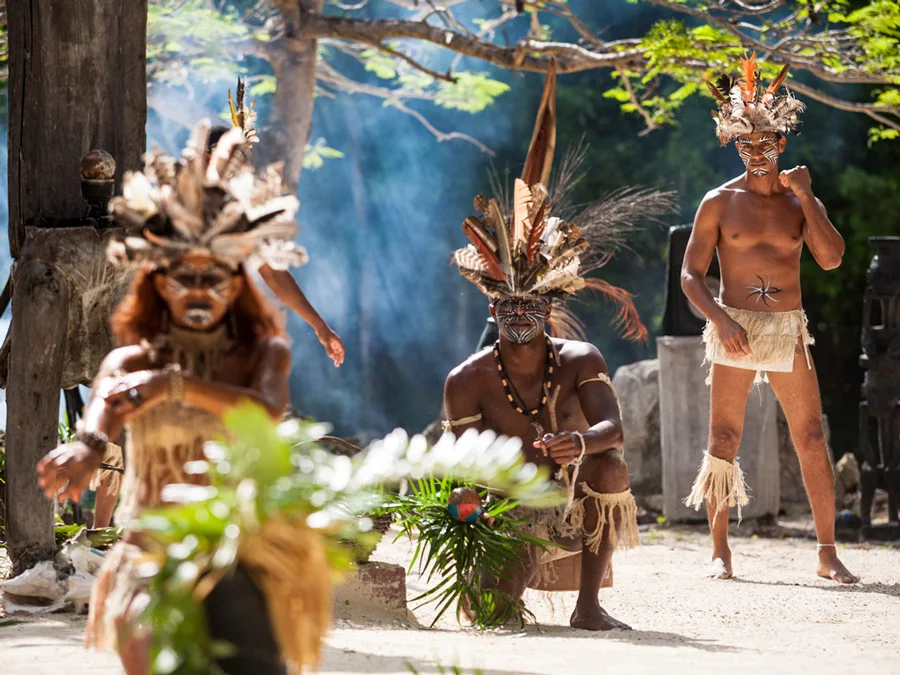
Before the Spanish arrived, the island of Haiti (Hispaniola) was home to the Taíno people. It was the Taíno who gave the island the name “Haiti,” meaning “mountainous land.” Sadly, the Taíno were mercilessly wiped out by Spanish conquerors and ceased to exist as a people. But they left a deep legacy — words that have found their way firmly into the modern language, along with their own deities. You’ll often spot clay figurines around the Dominican Republic, made in memory of Taíno culture.
-
Every year, from mid-January to mid-March, humpback whales arrive in the warm waters of Samana Bay. Living off their fat reserves, they travel for weeks from the cold Arctic to give birth here. Visitors who come to the Dominican Republic during this window get to witness a natural spectacle of extraordinary beauty and power. The whales breach the surface, leap, and slap the water with their massive fins, delighting the bold travelers who’ve come to see them.
-
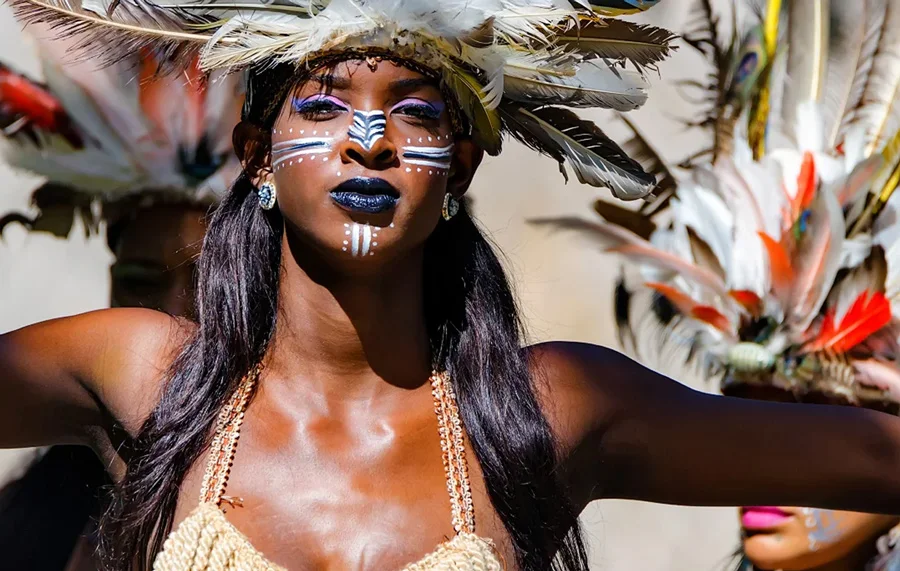
Dominicans are one of the most musical nations in the world! Everyone sings and dances — from restaurant waiters to bank employees. The rhythms of bachata and merengue run through the blood of the people of this “land of smiles.” Sensual bachata and rhythmic merengue, as musical genres, were both gifts from the Dominican Republic to the world. Interestingly, during dictator Trujillo’s rule, it was merengue rhythms that helped broadcast his political slogans into the minds of locals.
-
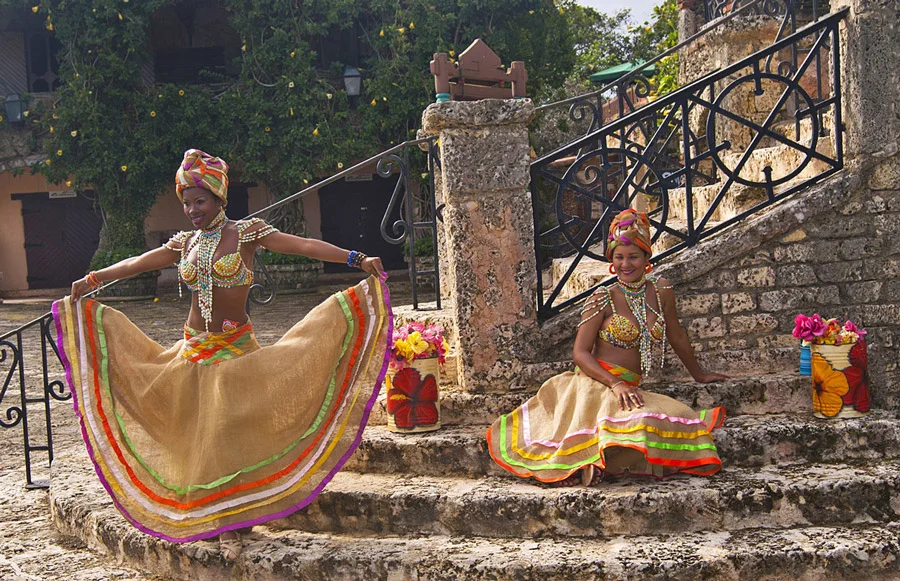
One of the Dominican Republic’s architectural landmarks is the village of artists, Altos de Chavón. This architectural ensemble is an exact replica of a 15th-century Spanish village and forms part of the Casa de Campo resort. It’s a stunningly scenic spot for photos and strolls, built atop the steep bank of the Chavón River. Its Greek-style amphitheater, seating 5,000, hosts world-famous performers every year. Altos de Chavón is also home to a branch of the renowned Parsons School of Design from New York.
-
The active Catholic Church of Saint Stanislaus opened in Altos de Chavón in 1979. Pope John Paul II gave the church the relics of Saint Stanislaus along with several carved statues during his visit to the Dominican Republic. The church became especially well known after hosting the weddings of several high-profile couples, such as Louis Alphonse, Duke of Anjou, and Venezuelan heiress María Margarita. Next to the church stands a bell tower, offering a breathtaking view over the Chavón River from the top.
-
Residents of neighboring Haiti often try to enter the more prosperous Dominican Republic illegally. About 3 million people living in the country are of Haitian origin — and that’s just according to official sources. Haitians are most often used as cheap labor. For example, a Haitian cutting sugarcane earns around $3 per ton. A hotel gardener earns around $70 a month. Educated Haitian immigrants tend to fare better — they often speak several foreign languages and can find work as hotel staff, earning wages that are decent by Haitian standards.
-
The Dominican Republic runs on credit. Practically everything here is bought on credit and resold a while later. People trade in their cars every six months. A Dominican won’t think twice about spending their entire paycheck on new clothes or electronics, or about renting a hotel room for the weekend with the family’s last bit of cash — or renting a luxury car.
-
Dominicans are big admirers of women. Even a woman with an entirely ordinary appearance feels uniquely confident here. Men have no trouble addressing women they barely know as “Mi vida” (my life), “Mi amor” (my love), “Mi cielo” (my sky/cloud), or “Mi alma” (my soul). And that doesn’t mean they’re proposing marriage.
-
The Dominican Republic has more than 20 national parks. One of the most scenic is rightfully considered Los Haitises. More than 360 lush, green islands form a unique archipelago — a whole ecosystem of its own. Here you’ll find frigatebird nests, mangrove forests, and Taíno caves.
-
Constanza can rightly be called the country’s breadbasket. Sitting 1,200 meters above sea level, this town is sometimes called “the Caribbean Switzerland.” Think green fields where strawberries ripen, rushing mountain rivers, and pine forests. At certain times of year, the temperature in this province drops to 0°C, which is why homes here have wood-burning stoves.
-
Most Dominicans don’t know how to swim, and on vacation they tend to prefer the pool.
-
The country’s electrical grid runs on 110 volts, with American-style outlets and plugs. You’ll need an adapter to charge your devices. And if you bring your own hair dryer from home, it’s best not to use it — there’s a good chance you’ll fry it.
-
Advertisements in the Dominican Republic are hand-painted directly onto building walls — especially for grocery stores, lottery kiosks, and beauty salons. All it takes is some paint, a brush, and a bit of imagination. This tradition of wall-painted ads goes back to the 1970s, when the country’s first printing presses arrived. Printing was expensive, so people made do with whatever materials were on hand.
-
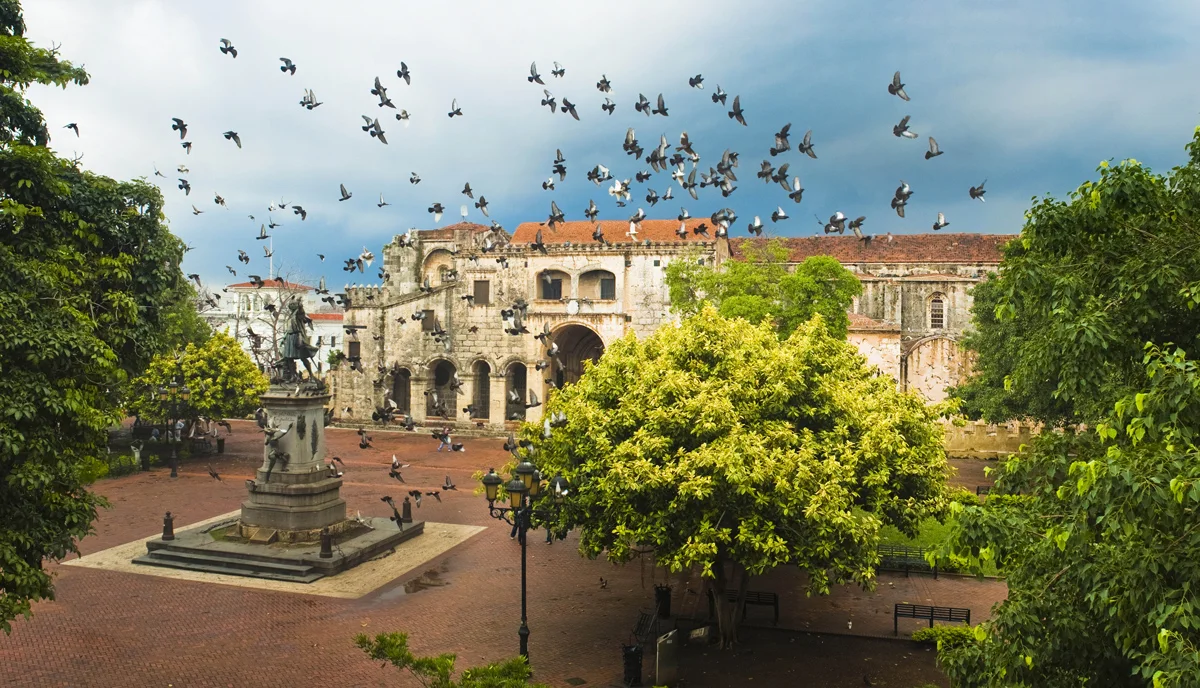
The Cathedral of Santa María la Menor is the country’s main cathedral and the oldest in all of the Americas. Its foundation was laid by Diego Columbus, son of the great explorer, in 1514. According to one version of events, this is originally where the remains of his father, Christopher Columbus, were laid to rest. In 1990, the cathedral was added to the UNESCO World Heritage list, along with the colonial city of Santo Domingo.
-
Santo Domingo is home to Calle Las Damas, the first paved street in the New World. In 1502, María de Toledo, wife of Diego Columbus, arrived in the city along with her entourage of noblewomen. There was simply nowhere for them to stroll around in their elaborate crinoline dresses — so the decision was made to pave a street specifically for them and name it “Ladies’ Street.”
-
The Dominican Republic is a genuine film set! Practically every corner offers a location for new scenes and unforgettable shots. The Chavón River has been the backdrop for films like “Rambo: First Blood Part II,” “Apocalypse Now,” and “Anaconda.” Colonial Santo Domingo, meanwhile, appeared in “The Godfather Part II.”
There’s so much more we could tell you about this astonishing country — this list could go on forever! Come fly to the Dominican Republic and make your own discoveries!